
Remember in March of 2020 when toilet paper was completely sold out at every store you went to? Talk about a stressful situation. During that time period, bidet sales grew significantly as a solution and upgrade from their standard toilet!
No one ever wants to be caught in a sticky situation like not having any toilet paper. Bidets and washlets helped solve that problem. Plus, people have quickly realized that using a bidet toilet makes you feel much cleaner after using the restroom.
But what are main differences between a washlet vs bidet? The terms are often used interchangeably, which can make it confusing to differentiate the two. Let’s take a deeper dive to understand the difference between washlets vs bidets and explore the pros, cons, and find the right solution for you.
The Benefits of Washlets and Bidets
You might be wondering why you’d even need a washlet or bidet when toilet paper exists. But even when toilet paper is sufficiently stocked in stores, washlets and bidets are great things to have.
In layman’s terms, a washlet or bidet is a cross between a toilet and a shower. They use water to clean the person’s nether regions after using the toilet, instead of relying on toilet paper to do the job.
Although washlets and bidets have their differences, they also have many similarities and shared benefits. Some of these benefits include:
- They help keep your toilet working properly by avoiding frequent clogs. No toilet paper = no clogs!
- They’re very eco-friendly since you won’t be purchasing and using so much toilet paper. The average person uses 100 rolls of toilet paper each year! (Not to mention the plastic wrapping toilet paper comes wrapped in…)
- The user achieves a much higher level of cleanliness and freshness after using a bidet or washlet.
- They both help prevent and alleviate yeast infections and hemorrhoids.
- For a considerably low price, they offer a level of European luxury.
- You don’t have to worry about the stores running out of toilet paper ever again.
What Is a Washlet?
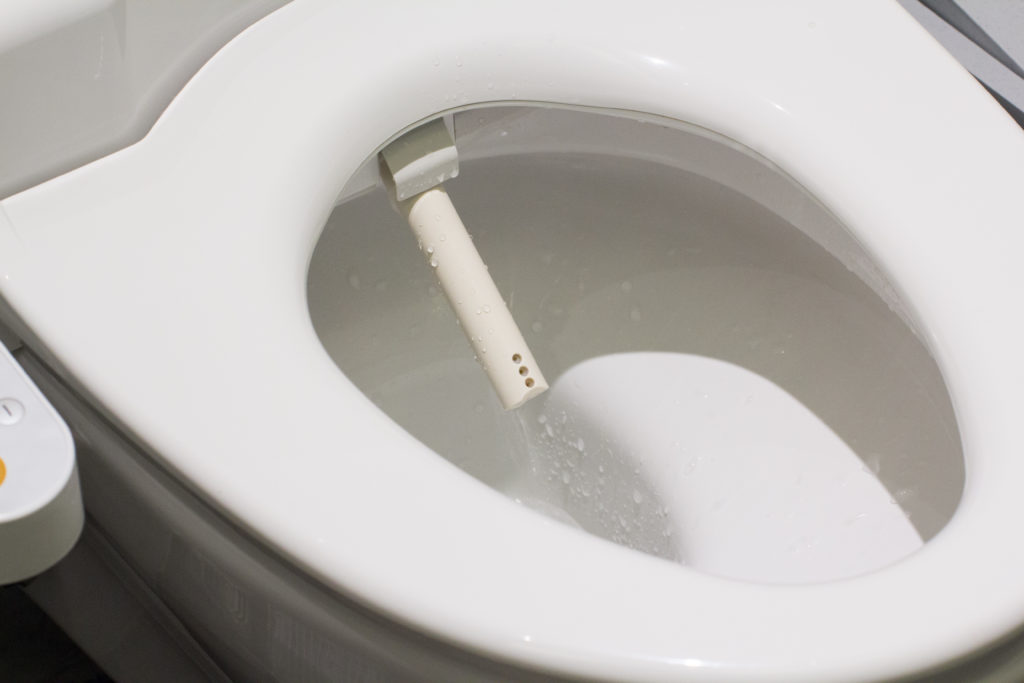
Now, let’s get into the nitty-gritty differences between washlets and bidets. The toilet manufacturer TOTO actually trademarked the name “washlet.” When most American people think of a bidet toilet, they’re actually thinking of a washlet.
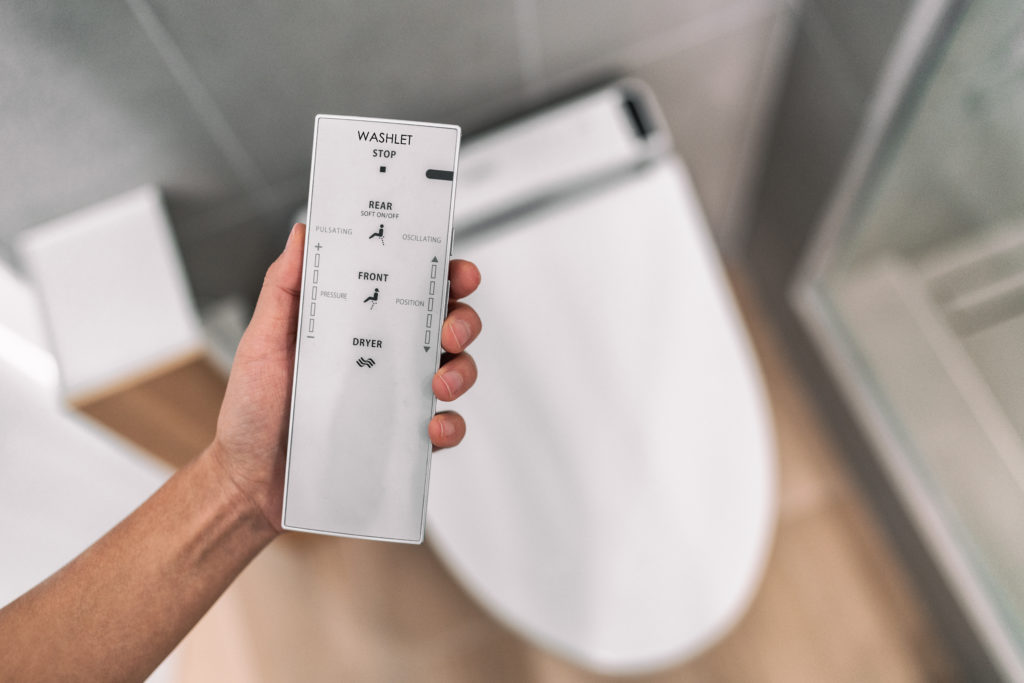
A washlet is a toilet seat with bidet functions and other features integrated directly into the seat. The high-tech washlet toilet seat replaces a traditional toilet seat, and it has a water hook-up and spray nozzle in the back. You can operate the water sprayer with an attached remote control.
Washlets don’t require any special space or plumbing because they simply replace the existing seat on your toilet.
Since “washlet” is a trademarked term, it is typically used to refer to TOTO brand washlets. However, they can also be referred to as:
- Shower toilet seats
- Bidet seats
- Bidet toilet seats
You can see why it’s confusing to differentiate the two when “bidet” is used to describe a washlet! Essentially, the defining component of a washlet is that the water spraying functions are integrated into the toilet seat.
What Is a Bidet?
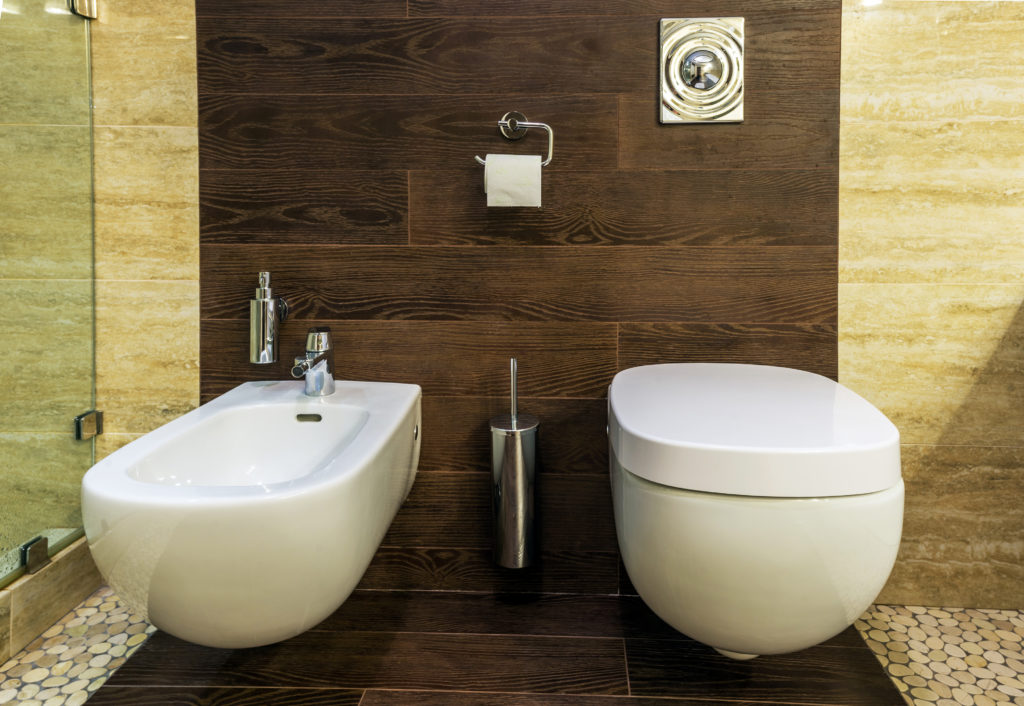
The word “bidet” is commonly used to broadly describe any product that cleans a person’s nether regions with water after using the toilet. But technically, a bidet is a miniature sink used to rinse off a person’s rear. A traditional bidet looks like the combination of a toilet and a sink because there is a faucet and handles. It is a completely separate object from a toilet. They are not connected.
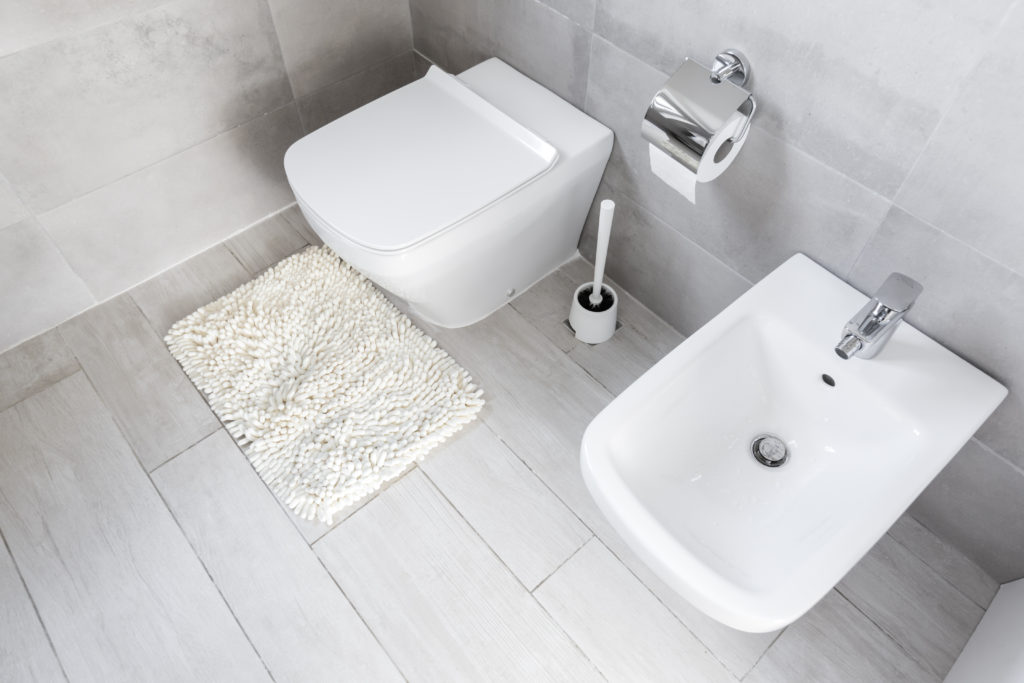
When using a traditional bidet, a person would use the toilet and then move to the bidet to rinse off and clean their body. Traditional bidets are much more common in Europe and Asia, and they aren’t very common in North America.
However, other types of bidets are much more popular in the United States, such as:
- Bidet attachments
- Bidet sprayers
- Portable bidets
If you hear someone in the U.S. say they got a bidet, they’re likely referring to a water spraying bidet attachment that they added to their toilet. A bidet attachment operates similarly to a washlet. Traditional bidets are completely separate appliances from toilets.
Pros and Cons of Both
Now that you know the difference between washlets and bidets, let’s start narrowing down which is the best option for you. Each device has its pros and cons which will help you get a better sense of how they would suit your life.
Washlet Pros ✅
- Washlets are space-saving. There’s no need for a separate fixture because the spraying function fits right on top of your existing toilet and connects to your existing plumbing.
- Aesthetically, many people appreciate being able to close the lid on a washlet, unlike the open design of a bidet.
- They feature numerous additional features that make things even more comfortable. Some of these features include heated seats, warm air dryers, deodorizers, auto open and close, self-cleaning systems, auto flushing, and more! You may even be able to set user preferences on your washlet.
- Washlets (and bidet attachments) are very easy to install. Washlets simply fit on top of your current toilet after you replace the seat, and a single hose connects to the water supply.
- Most people find washlets to be more comfortable to sit on.
Washlet Cons ❌
- You must have an electrical outlet nearby because washlets need to be plugged in for full functionality. If you don’t have an outlet, you’ll need to get one installed.
- The retail cost of a washlet can be more expensive than a bidet.
- Some people don’t like the look of washlets considering the remote control and any exposed connections.
Traditional Bidet Pros ✅
- The faucet on traditional bidets allows you to manually adjust the water pressure instead of relying on preset settings.
- Bidets have a hot water line running to them, so you’ll get consistent water temperature each time. (Washlets use an instant heater function that doesn’t always last as long, so you may get fluctuating temperatures.)
- Bidets usually cost less than washlets. (Before installation costs.)
- It comes down to personal preference, but some people find bidets more comfortable to sit on.
Traditional Bidet Cons ❌
- You have to get up from the toilet to use the bidet, unlike a washlet which allows the user to stay in one place.
- The water reach is limited to the faucet’s area.
- Bidets require more space in your bathroom to install an additional appliance.
- Bidets need their own plumbing, so you need to factor in additional plumbing costs.
- Traditional bidets are not very common in the United States, so installing one could negatively affect the resale value of your home.
Comparing Washlet vs Bidet in 5 Categories
Let’s take an even closer look at how washlets and bidets perform in specific categories. We’ll be assessing their performance in:
- Space
- Installation
- Price
- Comfort
- Water temperature
1) Taking Up Space 📐
Washlets definitely win if you don’t have any extra space in your bathroom. They don’t take up any additional space because they simply replace your current toilet seat. Washlets are definitely ideal in small bathrooms and powder rooms.
Bidets, on the other hand, are stand-alone appliances, so they take up a fair amount of additional space in a bathroom. Installing a traditional bidet is like installing a second toilet in the same room. There are also building codes you must meet if you install a traditional bidet. You need a minimum of 60 inches of space to have a toilet and bidet next to each other.
Winner: Washlet
2) Ease of Installation 🔧
Washlets and bidet attachments are designed for DIY installations. Most homeowners can install their own washlet or bidet attachment in just a few minutes. But you can definitely rely on the expertise of a plumber if you don’t feel comfortable installing your own washlet, or if you’re getting a new toilet installed at the same time.
Washlets use a T connector to tap into your toilet’s water supply, and they require electricity, so you’ll need a GFCI outlet nearby. If you don’t have an outlet nearby, you’ll need to get one professionally installed by an electrician.
Bidet installations should not be attempted as DIY projects. Bidets need separate supply and waste plumbing lines from your toilet, so they must be installed by a professional plumber. Installing a bidet can be simple when a professional tackles it, but the length of time it takes depends on if there’s a “water wall” of pipes already in place. The further the pipes need to travel, the longer the installation will take.
Winner: Washlet
3) Price Point 💰
If you only consider the upfront retail price, washlets are more expensive. Low-end washlets with simple, cold water functions can run around $100. But high-end washlets with numerous high-tech functions can cost closer to $1,800. However, if you already have an outlet in place and you install the washlet yourself, the average cost runs between $500 and $750.
Bidets have an average retail price of $300-$500, but there will be required installation costs. After hiring a professional, the cost of purchasing and installing a bidet runs closer to $1,000.
Winner: It’s a tie! It all depends on the style, brand, and additional features of the washlet or bidet you choose. Plus, anyone with a washlet or bidet is a winner in our book because doing away with toilet paper saves roughly $200 a year!
4) Comfort Level 😄
The comfort category will almost always come down to personal preference. Some people find washlets to be much more comfortable, while others prefer bidets.
Typically, a higher-end style of washlet will be more comfortable than a lower-end style. But regardless, you’ll never have to get up and move to a new fixture if you have a washlet.
With bidets, you must move from the toilet to an entirely new fixture. Bidets are typically lower than toilets, so they can prove difficult or uncomfortable for people with mobility issues, very tall people, and pregnant women.
Winner: It’s a tie! Comfort comes down to personal preference. However, very high-tech washlets might have a slight edge in this category.
5) Water Temperature 🌡
Water temperature can make or break some people’s experiences with washlets and bidets. Most people don’t want to get sprayed with cold water, so it’s important to note that washlets are hooked up to your toilet’s water supply. This means washlets are fed with cold water.
Certain models of washlets have instant heaters, but sometimes these heaters aren’t very reliable, so you may not get consistent warm temperatures.
Since bidets have separate plumbing from toilets and have their own hot and cold water faucets, you can manually adjust the temperature of your water. Hot water is more readily accessible in bidets, making it easier to adjust the water temperature to your preference from the start.
Winner: Bidet
The Best Way to Install a Washlet or Bidet
We hope this guide helped you narrow down your preference towards a washlet vs bidet. Although the two fixtures are similar and both have incredible benefits, washlets have a slight upper hand over traditional bidets.
Before you make a decision, schedule a visit to the AJ Alberts plumbing showroom in Woodbury, MN. You’ll be able to view TOTO washlets and bidets, and a professional can help you decide what’s best for your home.
Then, when it’s time for the installation, you can trust the experts at AJ Alberts Plumbing. Contact us today and say goodbye to toilet paper forever!