Water Conditioning
What a Free Water Test Checks and What Your Numbers Mean
A Twin Cities master plumber explains what a free water test measures, from hardness to iron, nitrate, and PFAS, and what your results mean. Call 651-738-0580.
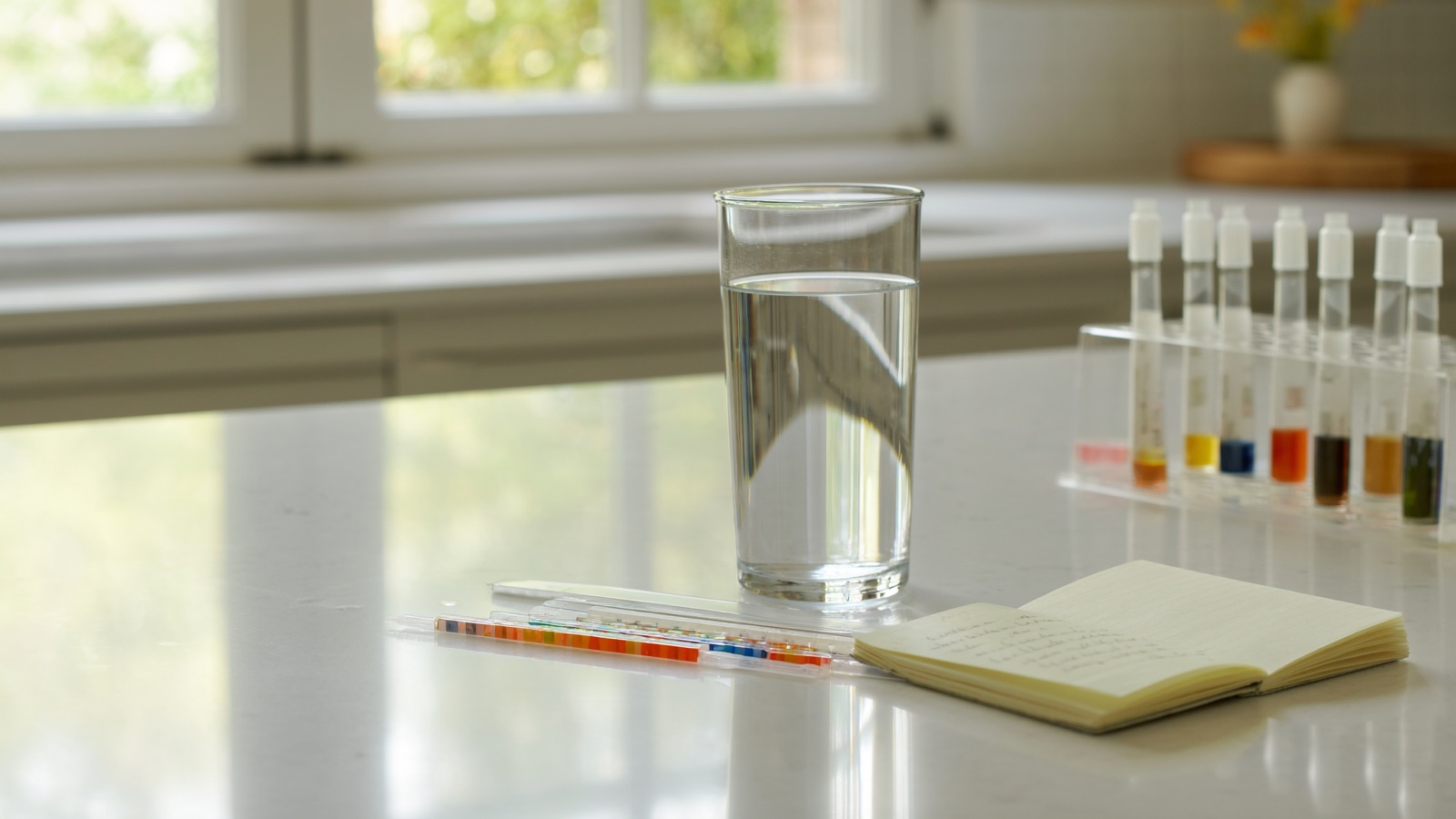
A free water test measures the numbers that quietly run your home: hardness in grains per gallon, iron, manganese, pH, and total dissolved solids, plus a chlorine check on city water. Those results tell you why your fixtures stain, your water heater scales up, and your soap will not lather. For health-based concerns like nitrate, arsenic, lead, and PFAS, a certified laboratory test is the correct step, and an honest plumber will tell you which one you actually need.
Why a water test is the first thing we do
At AJ Alberts we have been treating East Metro water since 1989, and here is the plain truth: you cannot fix water you have not measured. Homeowners across Woodbury, Stillwater, Cottage Grove, Lake Elmo, and Hudson call us about spotty glassware, orange sink stains, or a rotten-egg smell, and every one of those complaints traces back to a number on a test report.
A free water test replaces guessing with data. It takes a few minutes, it costs nothing, and it is the foundation of every recommendation we make. Because we have no commissioned salespeople, the test is a diagnosis, not the opening move in a pitch. If your water is fine, we will tell you it is fine.
You can bring a sample to our water treatment showroom at 7975 Afton Road in Woodbury, or we can test at your home. Either way, you leave with real numbers and a straight explanation of what they mean.
What an in-home water test measures
A standard in-home test covers the parameters that determine how your water behaves day to day. These are the taste, odor, and appearance issues the EPA groups under its secondary drinking water standards, the ones that damage plumbing and appliances rather than pose an acute health risk.
| What we test | What it means | Typical target |
|---|---|---|
| Hardness (grains per gallon) | Calcium and magnesium that cause scale, spots, and dry skin | Under 3.5 gpg is soft |
| Iron | Orange and brown staining, metallic taste | Below 0.3 mg/L (EPA secondary) |
| Manganese | Black specks and staining, bitter taste | Below 0.05 mg/L (EPA secondary) |
| pH | Acidity or alkalinity; low pH corrodes pipes | 6.5 to 8.5 (EPA range) |
| Total dissolved solids (TDS) | Overall mineral and salt content | Below 500 mg/L (EPA secondary) |
| Chlorine (city water) | Disinfectant taste and smell | Varies by system |
These six numbers are enough to size a water softener correctly, explain your staining, and decide whether you need iron or odor removal, filtration, or nothing at all.
Hardness: the number that matters most in the Twin Cities
Hardness is the headline reading for almost every home we test. It is measured in grains per gallon (gpg), and the U.S. Geological Survey uses a simple four-tier scale.
| Classification | Grains per gallon | Milligrams per liter |
|---|---|---|
| Soft | 0 to 3.5 | 0 to 60 |
| Moderately hard | 3.5 to 7 | 61 to 120 |
| Hard | 7 to 10.5 | 121 to 180 |
| Very hard | Above 10.5 | Above 180 |
One grain per gallon equals about 17.1 parts per million, so the units convert cleanly. Woodbury city water sits around 13.5 gpg, which lands squarely in the very hard category. Blaine, one of our northern service cities, runs even harder, into the high teens and low twenties. That hardness is exactly why a softener pays for itself here: hard water leaves scale inside your water heater, faucets, and dishwasher, and that scale shortens the life of every appliance it touches. Our Minnesota hard water and water softener guide walks through how that damage adds up over time.
Iron and manganese: the staining culprits
If you have orange streaks in the toilet tank or black flecks in the tub, iron and manganese are the usual suspects, and they are especially common on private wells in the St. Croix Valley and Western Wisconsin. The EPA sets a secondary standard of 0.3 mg/L for iron and 0.05 mg/L for manganese, both based on staining and taste rather than a health limit. Manganese carries an added note: the Minnesota Department of Health advises keeping levels low in water used to mix infant formula. When your numbers come back high, iron and odor removal is a targeted fix, not a whole-home guess.
pH and TDS: the quiet indicators
Low pH means acidic water, and acidic water slowly eats copper and galvanized pipe, sometimes showing up as blue-green staining on fixtures. High total dissolved solids point to a heavy mineral or salt load and often explain a flat or salty taste. Neither is dramatic on its own, but together with hardness they tell us whether a softener alone will do the job or whether you need filtration or reverse osmosis behind it.
What a free in-home test does not cover
Here is where honesty matters. An in-home test is excellent for the mechanical, taste, and staining questions. It is not a substitute for a certified laboratory when the concern is health. The Minnesota Department of Health recommends that private well owners test through an accredited lab for the contaminants that carry real health limits.
| Contaminant | EPA limit | Why it needs a lab |
|---|---|---|
| Nitrate | 10 mg/L | Serious risk for infants; common near farmland |
| Arsenic | 0.010 mg/L | Naturally present in Minnesota groundwater |
| Lead | 0.015 mg/L action level | Leaches from older pipes and fixtures |
| Coliform bacteria | None allowed | Indicates possible contamination |
| PFAS | Varies by compound | Requires specialized lab analysis |
MDH lists nitrate, coliform bacteria, arsenic, lead, and manganese as the five most common contaminants in Minnesota well water. For wells, the guidance is straightforward: test for nitrate and bacteria every year, and for arsenic, lead, and manganese at least once. When our in-home test raises a flag in one of these areas, we tell you plainly and point you to a certified lab. We would rather send you to the right test than sell you a system you do not need.
PFAS in the East Metro
No East Metro water conversation is complete without PFAS. Woodbury sits in the heart of the region affected by decades-old contamination, and the Minnesota Department of Health has issued health advisories on nine of the city’s twenty municipal wells. The city is treating that water to meet standards and is building a permanent treatment plant scheduled to come online in 2028. PFAS cannot be measured with an in-home test, and a standard softener does not remove it. Certain reverse osmosis and specialized filtration systems can. Our PFAS in East Metro drinking water guide covers what the advisories mean for your home, and reverse osmosis is the practical countertop-level defense for drinking and cooking water.
The road salt problem hiding in your numbers
One reading that surprises people is chloride, and it ties directly to a Twin Cities-specific problem. The EPA secondary standard for chloride is 250 mg/L, but chloride levels in our groundwater have been climbing for years. The Minnesota Pollution Control Agency reports that roughly 30 percent of shallow monitoring wells in the metro exceed the chloride water quality standard, driven by the estimated 365,000 tons of road salt applied across the metro each winter, plus discharge from water softeners.
That last part is worth sitting with. A poorly tuned or oversized softener dumps far more salt into the wastewater stream than it needs to. This is one more reason to size a softener from a real test rather than a rule of thumb. A correctly sized, demand-initiated softener uses less salt, costs you less to run, and puts less chloride into the water we all share. Getting the hardness number right is both a home decision and a neighborhood one.
What to do with your results
Once you have your numbers, the path is usually clear:
- Very hard water, no iron: a properly sized water softener. See our water softener installation page for sizing.
- Hard water plus iron or odor: softening paired with iron and odor removal.
- Taste, PFAS, or drinking-water concerns: reverse osmosis or targeted water filtration at the point of use.
- A health flag on a well: a certified lab test first, then the right treatment.
Every one of these starts with the same free test. If you want the fuller picture of what East Metro homes are dealing with, our overview of common water issues in East Metro homes puts these readings in context, and the Woodbury water quality page covers our home city specifically.
Sources and Further Reading
- U.S. Geological Survey, Water Hardness and Hard Water
- EPA, Secondary Drinking Water Standards
- Minnesota Department of Health, Well Water Testing
- Minnesota Pollution Control Agency, Chloride
The Bottom Line
A free water test turns vague complaints into hard numbers, and hard numbers turn into the right fix instead of an expensive guess. In a region where the water runs very hard, carries PFAS in places, and picks up more chloride every winter, knowing your readings is the smartest first move a homeowner can make. AJ Alberts has done this for East Metro families since 1989, we are fully licensed in Minnesota under PC150039 and in Wisconsin, and we run no commissioned salespeople, so you get an honest reading and honest advice.
Ready to see your numbers? Schedule your free water test or stop by our Woodbury showroom on Afton Road, and call AJ Alberts at 651-738-0580.
Frequently Asked Questions
What does a free water test actually measure?
How hard is the water in Woodbury and the East Metro?
What is a good water hardness number?
Do I need a lab test or is an in-home test enough?
How much does a free water test cost?
How often should I test my water?
Related services
Need Help in the Twin Cities?
Free in-home water test. Written upfront pricing. Lifetime craftsmanship warranty.