Plumbing
Irrigation Backflow Preventer Problems and Fixes in Minnesota
Irrigation backflow preventer leaking, dumping water, or due for its annual Minnesota test? The common problems, the real fixes, and what homeowners owe.
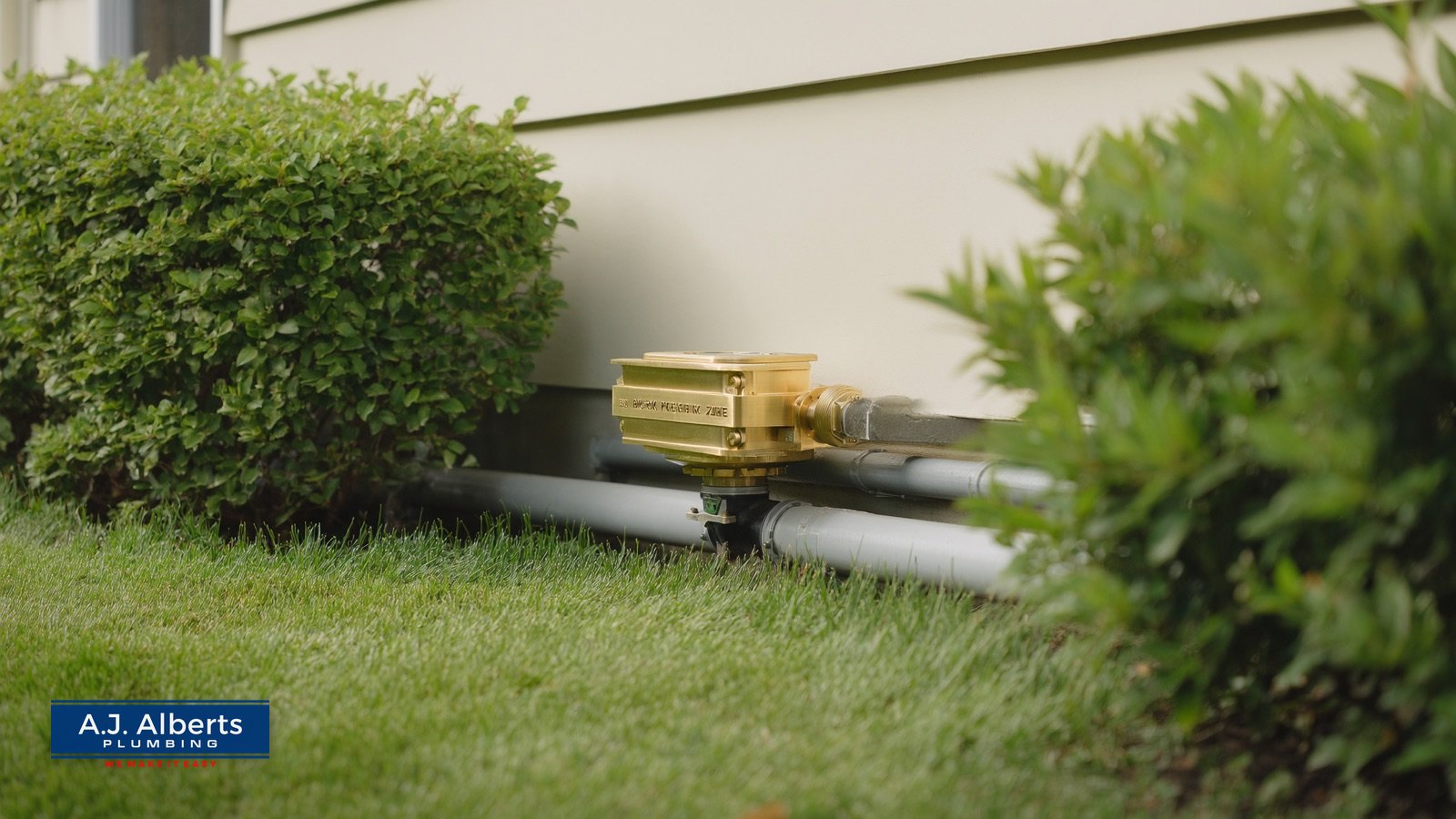
Every lawn irrigation system in Minnesota has a backflow preventer, a one-way valve that keeps sprinkler water, and anything dissolved in it, from being pulled back into your home's drinking water. When one fails it usually shows up as water dripping or steadily discharging from the device, weak sprinkler pressure, or a failed annual test, and in the East Metro the most common cause by far is freeze damage from our winters. Minnesota law requires these assemblies to be tested every year by a certified tester, and the good news is that most problems are fixed with a rebuild, not a full replacement.
If you have an in-ground sprinkler system in Woodbury, Stillwater, Cottage Grove, or anywhere in the Twin Cities, there is a piece of brass hardware near your house doing a quiet, important job. Most homeowners never think about it until it starts leaking, fails a test, or shows up on a notice from the city. Here is what it does, why it fails, and how we fix it.
What does a backflow preventer actually do?
Your lawn irrigation lines sit in the soil, right next to fertilizer, weed killer, pet waste, and whatever is pooling on the ground. Normally your water pressure pushes clean water out to the sprinkler heads. But if the city pressure suddenly drops, from a water main break, a fire hydrant opening down the street, or heavy neighborhood demand, the flow can briefly reverse. Without protection, dirty water from the irrigation lines can get siphoned backward into your household plumbing and even into the public water main.
A backflow preventer stops that from happening. It is a mechanical one-way gate between your sprinkler system and your drinking water. Because irrigation water can carry lawn chemicals, plumbing codes classify a sprinkler system as a high-hazard cross connection, which is why it is held to a stricter standard than, say, an outdoor faucet. Protecting the water supply is the whole reason the device exists, and it is the same reason we care so much about what is actually in your water in the first place.
PVB or RPZ: which backflow preventer is on your system?
Two types cover almost every residential irrigation system in the East Metro. Knowing which one you have tells you a lot about how it behaves and how it needs to be winterized.
| Feature | Pressure Vacuum Breaker (PVB) | Reduced Pressure Zone (RPZ) |
|---|---|---|
| Where you find it | Most common on residential lawn systems | Higher-hazard setups, chemical injection, or where the city requires it |
| Mounting | Above grade, usually near the house | Above grade, larger body with a visible relief port |
| Normal behavior | May spit briefly at startup | Can discharge water from the relief valve when it is doing its job |
| Freeze risk | High if left uninsulated | High, multiple chambers must be fully drained |
| Testing | Annual, certified tester | Annual, certified tester with added MN certification |
If you are not sure which one you have, that is normal. A quick look during your annual test settles it, and it matters because an RPZ has a relief valve that is designed to dump water, so a little discharge is not always a defect the way it would be on a PVB.
Why does Minnesota require annual testing?
This is not a suggestion, it is code. Under the 2020 Minnesota Plumbing Code, backflow prevention assemblies must be tested when they are installed and at least once every year after that. Reduced pressure zone assemblies must be tested annually no matter how old they are, and testable devices like pressure vacuum breakers fall under the annual rule for installations made on or after January 23, 2016.
A few specifics worth knowing:
- The test must be done by a tester certified to ASSE Standard 5110, and RPZ testing requires an additional certification from the Minnesota Department of Labor and Industry.
- The results are reported to the administrative authority, which is usually your city, and to your public water supplier, generally within 30 days.
- Cities across the East Metro handle the tracking. Woodbury, for example, maintains its own backflow preventer program and sends property owners annual reminders.
Skipping the test can lead to compliance notices, and in some jurisdictions to water service consequences. It is a small, quick job that keeps you on the right side of the rules and, more importantly, keeps your drinking water protected.
The most common irrigation backflow problems we see in the East Metro
After more than 35 years of Minnesota winters, we see the same handful of failures over and over.
- Freeze damage. This is number one and it is not close. Water left inside the brass body expands as it freezes and cracks the housing or the internal checks. A single hard freeze on an uninsulated assembly can do it.
- Continuous discharge or dripping. On an RPZ, steady dumping from the relief valve usually means the first check is fouled or worn. On a PVB, constant dripping points to a worn seal or a freeze crack. Brief discharge at startup can be normal, constant discharge is not.
- Weak sprinkler pressure. If your heads are not popping up or throwing water like they used to, debris or a failing check inside the backflow assembly can be choking the flow.
- A failed annual test. Worn rubber seats, tired springs, or grit under a check will cause a unit to fail its yearly test even when it looks fine from the outside.
How irrigation backflow problems get fixed
The first step is always a test, because it tells us exactly which internal part is not holding. From there, the fix is usually straightforward.
| Situation | Typical fix |
|---|---|
| Failed test, worn seats or springs | Rebuild kit, replace the internal rubber and springs |
| Fouled check from debris | Clean, rebuild, and retest |
| Relief valve dumping (RPZ) | Rebuild the first check, retest |
| Cracked body from a freeze | Replace the damaged assembly |
| Obsolete unit, no parts, or wrong size | Replace and bring up to code |
The important takeaway is that most assemblies are rebuildable. A rebuild restores the unit for a fraction of the cost of a new one, and replacement is reserved for cracked, obsolete, or improperly sized devices. We give you written pricing before any work starts. We have zero commissioned salespeople, so nobody here earns a bonus for talking you into a replacement you do not need.
Winterizing so it survives a Minnesota winter
Since freeze damage causes most failures, fall winterization is the single best thing you can do. In the East Metro that means handling it before the first hard overnight freezes set in, generally through October. The basic steps:
- Shut off the water supply to the irrigation system.
- Relieve the trapped pressure by opening the test cocks and bleed valves.
- Blow out or fully drain the lines so no water is left sitting inside the assembly.
- Insulate or cover the above-grade backflow device, since that brass is exposed to the air.
RPZ assemblies have multiple chambers, so complete draining matters even more. Come spring, before you fire the system back up, look the assembly over for cracks, leaks, a dripping relief valve, or low pressure. Any of those is a sign the winter got to it, and it should be tested before the season starts.
If you would rather not crawl around the manifold in the cold, this is exactly the kind of seasonal task a plumbing maintenance plan is built for. We put you on the calendar so the winterization and the annual test both happen on time, every year, without you having to remember.
Who tests and repairs it, and staying compliant
A.J. Alberts is licensed and certified to test, rebuild, and replace backflow assemblies across the Twin Cities East Metro, the St. Croix Valley, and western Wisconsin. Our operations manager Jason Wallraff is a master plumber and a licensed RPZ and backflow technician, and customers are welcome to request him by name. When we test your device, we file the report with your city and your water utility so you stay compliant without the paperwork headache.
For water-treatment questions, ask about the free basic in-home test. The free basic in-home test checks hardness, iron, chlorine, pH, total dissolved solids, and alkalinity, plus nitrate for well-water customers. It does not measure PFAS or establish drinking-water safety. A.J. Alberts offers separate paid PFAS testing for municipal-water and private-well customers. We collect and submit the sample and explain the laboratory report. Ask about the scope and price when booking. See our plumbing services and outdoor plumbing guide.
Sources and Further Reading
- Minnesota Department of Labor and Industry, Backflow Devices fact sheet (2020 Minnesota Plumbing Code)
- City of Woodbury, Backflow Preventers program
- Minnesota Department of Health, High Hazard Cross Connections and Responsible Authorities
The Bottom Line
Your irrigation backflow preventer is a small device with a big job, guarding your drinking water against everything that lives in your lawn. Minnesota requires an annual test, freeze is its worst enemy, and most problems are solved with a rebuild instead of a replacement. Get it tested in spring, winterize it in fall, and you will rarely think about it again.
Due for your annual test, or seeing water where it should not be? Call A.J. Alberts at 651-738-0580 or book online. Licensed and insured in Minnesota (PC150039) and Wisconsin, locally owned and operated, serving Twin Cities homeowners since 1989, and proud to be your East Metro plumbing and water conditioning team.
Water-treatment reference: MDH, home water softening.
Frequently Asked Questions
Do I really need to test my lawn irrigation backflow preventer every year in Minnesota?
Why is water constantly dripping or spraying from my backflow preventer?
What happens if my backflow preventer freezes over the winter?
Can a backflow preventer be repaired, or does it have to be replaced?
Who can legally test my irrigation backflow preventer in the Twin Cities?
Related services
Need Help in the Twin Cities?
Free in-home water test. Written upfront pricing. Lifetime craftsmanship warranty.