
Plumbing
Summer Storms and Sump Pumps: Why East Metro Basements Flood
A Woodbury master plumber on heavy rain sump pump failures across the East Metro: cycling, check valves, discharge code, and backups. Call 651-738-0580.
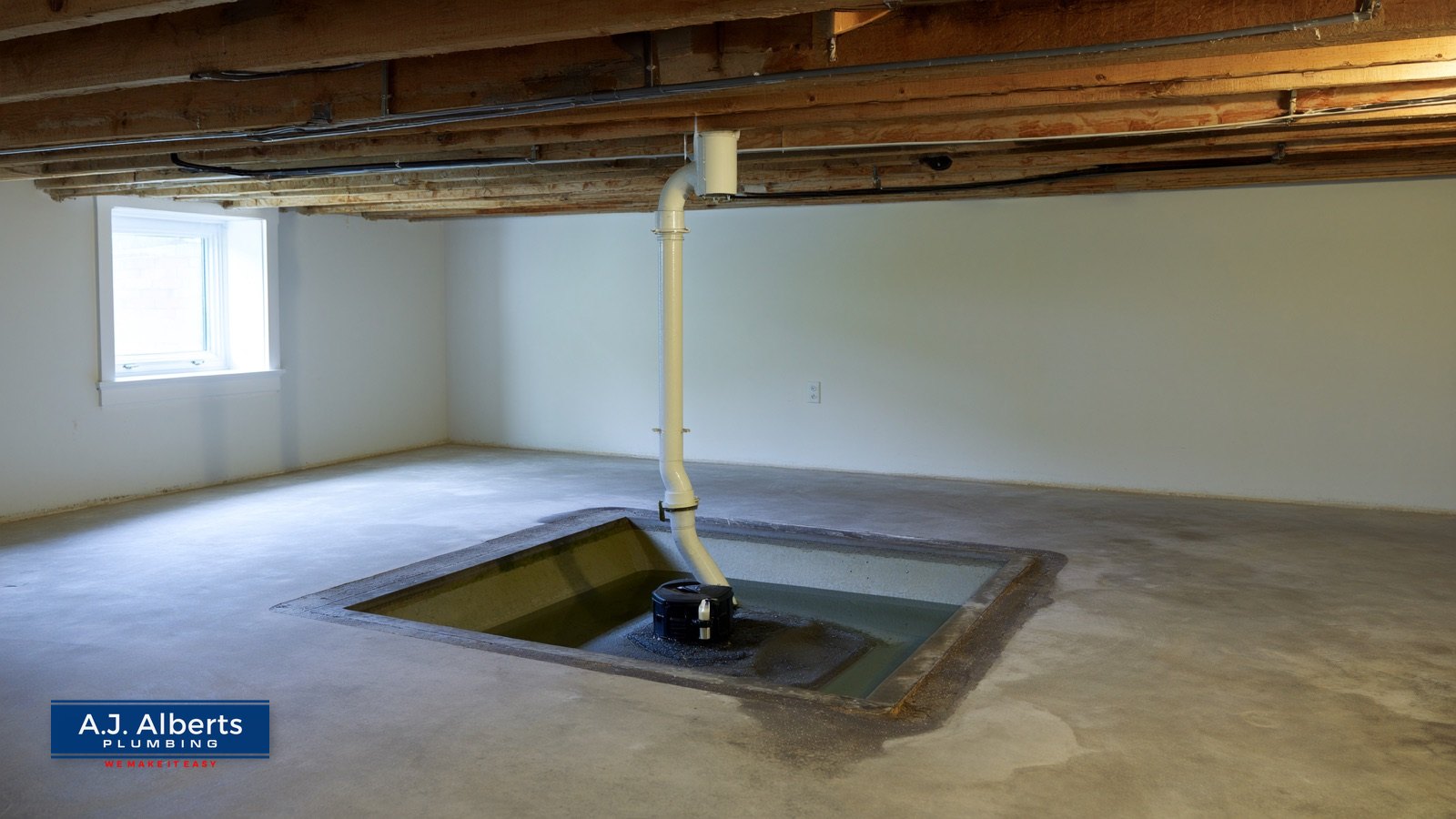
Heavy summer rain does not usually break a sump pump. It exposes one that was already marginal. August is the second wettest month in the Twin Cities, averaging about 4.34 inches, and a saturated yard plus a two inch downpour can put more water into a pit in an hour than the pump moves in a normal week. The failures we get called for after East Metro storms are the same handful every time: a worn out pump, a failed check valve, a discharge line dumping water back against the foundation, or no power at all.
Why August storms are the real test for an East Metro sump pump
We have been pulling sump pumps out of basements in Woodbury, Cottage Grove, Lake Elmo, Oakdale, Stillwater, and Hudson since 1989, and the calls cluster in two windows. Spring snowmelt is the first. The second is right now, when a slow moving thunderstorm parks over one neighborhood.
The reason late summer storms are harder on equipment than a spring melt is rate. Snowmelt raises the water table over days. A storm cell drops rain faster than the soil can absorb it, especially on ground already saturated earlier that week. Per the Minnesota DNR’s Twin Cities climate normals, June averages about 4.58 inches, July about 4.06, and August about 4.34. Those are averages, not events. A single storm can deliver a third of a monthly normal in an afternoon, and that is when a pump quietly limping along for a decade finds its limit.
How often should a sump pump run during heavy rain?
During an actual downpour, cycling every few minutes is normal and healthy. Each cycle typically runs 10 to 30 seconds. The wetter the soil, the faster the pit refills, and the more often the float trips.
The pattern that should worry you is different. If the pump shuts off and restarts within a few seconds, over and over, the water it just pumped is falling back into the pit. That is short cycling, and it is usually a failed check valve. A bad or missing check valve sends a large share of each pumped gallon straight back down the pipe, so the motor does double the work for the same result. It is one of the fastest ways to burn out a pump, and the valve is a cheap part to replace first.
The other bad pattern is a pump still cycling hard days after the rain ended. Sometimes that is a genuinely high water table, which is common in Woodbury near wetlands and lakes. Often it is drainage. The City of Woodbury makes this point directly in its drainage guidance: frequent cycling can come from a high water table or from inadequate yard drainage, including improper grading and downspouts discharging too close to the foundation. If your gutters dump roof water three feet from the wall, your sump pump is being asked to pump your roof.
What actually fails in a heavy rain
Here is what we find, and what each symptom usually means.
| What you notice | Most likely cause | How urgent |
|---|---|---|
| Pump runs but water level does not drop | Clogged impeller, blocked discharge line, or pump undersized for the event | Immediate. The basement is on borrowed time |
| Pump restarts seconds after shutting off | Failed check valve letting water drain back | Soon. It is destroying the motor |
| Pump hums but does not move water | Stuck impeller or seized motor | Immediate |
| Pump never turns on with water in the pit | Stuck float, tripped breaker, or unplugged pump | Immediate. Check the breaker first |
| Pump cycles constantly days after rain | High water table, or yard water draining back to the foundation | Before the next storm |
| Deposits or odor in the pit | Cause needs assessment | Have the equipment checked; do not infer drinking-water quality |
| Over 8 years old and runs often | Normal wear reaching end of service life | Plan the replacement, not during a storm |
The most common real cause is the least technical one. The pump is old, it has run hard for years, and nobody has tested it. Most sump pumps last 8 to 12 years, but one in a high water table neighborhood that runs much of the year can be finished in 3 to 5. Run hours matter more than the date on the label.
Our sump pump homeowner guide for Twin Cities basements walks through how to test yours in about two minutes with a bucket of water. Do it before the next storm, not during one.
Where is a sump pump allowed to discharge in Minnesota?
Sump discharge goes outside. Clear water from a sump, from footing drain tile, or from a roof downspout may not be discharged into the sanitary sewer. That prohibition is standard across Minnesota municipal ordinances, and the reason is straightforward: groundwater routed into the sanitary system overwhelms treatment capacity during exactly the storms when capacity matters most. Communities enforce it, and some inspect for it.
Minnesota Plumbing Code chapter 4714 sets the equipment requirements. The sump must be watertight and gastight. Discharge piping must be sized per the manufacturer’s instructions and be at least three quarters of an inch in diameter. There must be a check valve and a fullway type shutoff valve in the discharge line.
Then there is the part code does not solve, which is where the water goes once it is outside. If the discharge terminates two feet from the foundation, that water soaks straight back down to the drain tile and returns to the pit. The pump is now in a loop, running against its own output. Woodbury’s guidance to route roof and yard water toward the street or a lower part of the yard applies to sump discharge for the same reason. Get the water genuinely away from the house.
Does a battery backup actually matter in the East Metro?
Yes, and the reason is not subtle. The storms that fill a sump pit fastest are the storms that take the power down. A primary pump with no electricity is not a slow leak, it is a rising pit with nothing pumping it.
Minnesota does not mandate a battery backup statewide, though individual cities set their own requirements. The decision comes down to what is downstairs.
| Setup | What it protects against | Where it fits |
|---|---|---|
| Primary pump only | Normal groundwater, if power holds | Unfinished basement, low water table |
| Primary plus battery backup | Power outages and primary pump failure | Most East Metro homes. The default for a finished basement |
| Primary plus water powered backup | Long outages, no battery to maintain | Municipal water with good pressure. Not an option on a well |
| Two pumps on separate circuits | Mechanical failure under heavy load | High water table homes running nearly year round |
A backup is not a substitute for a healthy primary pump. If your primary is nine years old, replacing it does more for you than bolting a backup onto a unit that is about to quit.
What orange slime in the pit is telling you about your water
Rust-colored deposits or slime in a sump pit need an assessment. Appearance alone cannot identify every organism or establish a health conclusion.
A sump pit is not a sampling point for drinking water. Local groundwater background does not establish the hardness or contaminant concentration at your tap.
Keep pump diagnosis and drinking-water testing separate. For a private well, follow well-testing guidance instead of inferring the result from a nearby sump pit. Our basic water test can help with treatment planning, but it does not measure PFAS or establish drinking-water safety.
What we check on a storm season sump inspection
When one of our licensed plumbers checks a sump system, this is the list:
- Pour water into the pit and confirm the float trips and the pump actually moves water
- Check the check valve for backflow and short cycling
- Inspect the impeller and pit for gravel, iron slime, and debris
- Verify discharge pipe size, the fullway shutoff, and that the line is not tied to the sanitary sewer
- Follow the discharge outside and confirm it ends well away from the foundation
- Assess the pump’s age and run pattern, and the backup and battery if there is one
We are a locally owned and operated shop with 10 plumbers, 5 of them master plumbers, and zero commissioned salespeople. Nobody here earns more by telling you the pump needs replacing. If it has years left, we will say so and leave. Sump work fits naturally into our maintenance plans for homes across Woodbury and the East Metro.
Sources and Further Reading
- Minnesota Plumbing Code, Chapter 4714, Office of the Revisor of Statutes, for sump and discharge requirements
- Drainage Concerns, City of Woodbury, on pump cycling and homeowner drainage responsibility
- Minneapolis/St. Paul Climate Normals, Minnesota DNR State Climatology Office
The Bottom Line
A sump pump is the only thing standing between a heavy August storm and your basement floor, and it is the one appliance in the house nobody tests. The age of the pump, the condition of the check valve, and where the discharge line actually ends decide whether the next storm is a non event or a claim.
If your pump is over 8 years old, cycles constantly, short cycles, or has never been backed up, get it looked at before the next system rolls through. We are licensed and insured in Minnesota, license PC150039, and in Wisconsin, serving the East Metro and St. Croix Valley since 1989. Honest diagnosis, written pricing, no pressure.
Call A.J. Alberts Plumbing at 651-738-0580 to have your sump system checked, and ask about a free water test while we are there.
Water-treatment reference: MDH, home water softening.
Frequently Asked Questions
How often should a sump pump run during heavy rain?
Where is a sump pump allowed to discharge in Minnesota?
How long does a sump pump last?
Do I need a battery backup sump pump in Minnesota?
Why is there orange slime in my sump pit?
What size discharge pipe does the Minnesota plumbing code require?
Related services
Need Help in the Twin Cities?
Free in-home water test. Written upfront pricing. Lifetime craftsmanship warranty.