Plumbing
Twin Cities Fall Plumbing Checklist Before a Hard Freeze
Use the Twin Cities fall plumbing checklist to protect pipes, outdoor faucets, sump equipment, and hot water before hard-freeze weather. Call 651-738-0580.
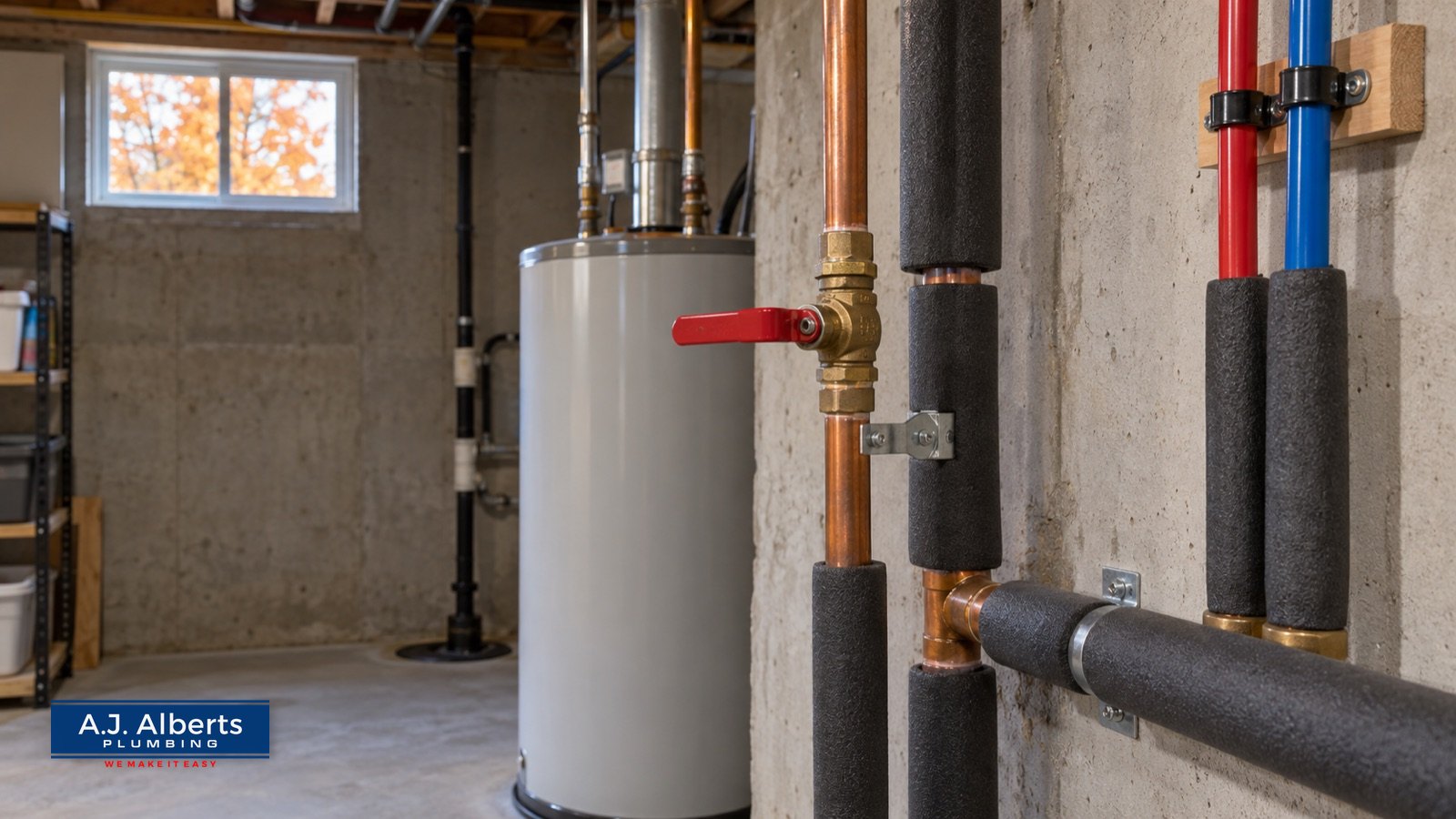
A Twin Cities fall plumbing checklist should cover eight areas before sustained freezing weather: outdoor faucets, the main water shutoff, exposed pipes, hidden leaks, the sump system, the water heater, the boiler or hydronic system, and the household cold-weather response plan. Finish the outdoor work before the first forecast temperature at or below 32 degrees, then correct any leak, failed valve, or equipment warning sign while there is still time to plan the repair.
October weather in Woodbury, Stillwater, Cottage Grove, Lake Elmo, Oakdale, Maplewood, Afton, and western Wisconsin can move from mild afternoons to freezing nights quickly. The goal is not to predict the exact first hard freeze. It is to remove trapped water from vulnerable plumbing, identify weak points, and make sure the household knows what to do if a pipe leaks.
This is a homeowner inspection list, not a reason to disassemble fuel-burning equipment or force an old valve. If a step exposes an active leak, damaged venting, repeated boiler fault, or a shutoff that will not move normally, stop and call a licensed plumber.
What are the eight fall plumbing checks?
| Check | What to do now | When to call a plumber |
|---|---|---|
| Outdoor faucets | Disconnect attachments and drain the line correctly | No indoor shutoff, poor drainage, loose faucet, or leakage |
| Main shutoff | Locate it and make sure everyone knows where it is | Valve is corroded, leaking, inaccessible, or will not operate normally |
| Exposed pipes | Find cold-wall, garage, attic, and crawlspace runs | Pipe cannot be safely insulated or the space has recurring freeze damage |
| Hidden leaks | Inspect fittings and use a no-use meter check | Meter changes, staining appears, or water is heard when fixtures are off |
| Sump system | Test normal operation and inspect the discharge route | Pump fails, cycles constantly, sounds abnormal, or discharge is damaged |
| Water heater | Check for moisture, corrosion, and service warnings | Any leak, combustion concern, fault code, or unreliable hot water |
| Boiler or hydronic heat | Check pressure behavior, zones, leaks, and faults | Pressure keeps dropping, heat is uneven, or faults repeat |
| Cold-weather plan | Know the shutoff, phone number, and safe response | Frozen pipe, burst pipe, standing water, or hidden-wall damage |
1. Have you disconnected every outdoor hose and attachment?
Remove the garden hose, Y-splitter, timer, nozzle, pressure washer, and any quick-connect fitting from every outdoor faucet. Store hoses after they have drained. If the faucet has a dedicated indoor shutoff, close it and drain the outdoor section according to the actual plumbing configuration.
A frost-free sillcock still needs an open path to drain. Leaving an attachment connected can trap water in the barrel and defeat the feature intended to protect it. An insulated cover can add protection after the line is prepared, but a cover does not drain trapped water or fix a faucet pitched toward the house.
The complete sequence is in our guide to winterizing outdoor faucets. Do not wait until the morning after the first freeze to find the side-yard faucet or the connection behind a detached garage.
2. Can everyone in the house find the main water shutoff?
Locate the main water shutoff before there is a leak. In many Twin Cities homes it is near the water meter or where the service line enters the basement, but the exact layout varies. Make sure another adult in the household knows the location and which direction closes it.
Do not force a valve that is heavily corroded, leaking around the stem, or difficult to move. An old gate valve can fail when disturbed. A plumber can evaluate whether it is safe to operate and whether a more dependable shutoff is appropriate.
Keep the route to the valve clear. Stacked storage in front of the main shutoff turns a manageable leak into a longer emergency.
3. Which pipes are exposed to the coldest air?
Walk the basement, utility room, attached garage, crawlspace, and any area where plumbing runs near an exterior wall. Look for missing or damaged pipe insulation, gaps around penetrations, cold drafts, and pipes tucked behind cabinets on outside walls.
U.S. Department of Energy guidance recommends insulating accessible hot-water piping and protecting vulnerable plumbing from freezing. Insulation slows heat loss, but it does not create heat. Plumbing in an unconditioned area may need a broader correction involving air sealing, routing, or reliable heat.
Avoid burying a leak or questionable fitting under new insulation. Check the pipe first for moisture, staining, corrosion, or an active drip. Our Twin Cities plumbing team can diagnose an exposed or repeatedly frozen section before a cosmetic cover hides the evidence.
4. Is a small leak already using water?
Check under sinks, around toilets, at appliance connections, near the water meter, and around visible valves. A small leak matters in every season, and cold weather can make access and cleanup harder.
The EPA WaterSense home-maintenance method is straightforward: read the water meter, use no water for two hours, then read the meter again. A changed reading indicates a probable leak. Make sure ice makers, water softeners, humidifiers, and other automatic water-using equipment are not running during the test, or the result will be misleading.
Do not assume a moving meter identifies the leak location. It only tells you that water probably moved somewhere in the system. A plumber still needs to separate a fixture leak, appliance use, running toilet, underground service issue, and other possibilities.
5. Is the sump pump and discharge route ready?
Lift the sump lid only if the system is designed for safe homeowner access. Follow the pump manufacturer’s test instructions, confirm the pump starts and stops normally, and listen for grinding or repeated short cycling. Outside, visually confirm that the discharge outlet is present, open, and directed away from the foundation.
Do not invent a fix for a buried, broken, disconnected, or poorly routed discharge line. The right repair depends on the pump, check valve, pipe route, grade, and local installation. If the pump does not run or the pit refills unusually fast, arrange an inspection rather than assuming it will recover during the next storm or thaw.
Our sump pump service page explains the difference between pump, backup, alarm, and discharge concerns.
6. Does the water heater show a warning sign?
Look around the water heater for moisture, rust streaks, staining, a dripping relief discharge, damaged venting, or a new sound. Check whether hot-water delivery has become unreliable. Do not open a gas compartment, cap a relief pipe, or change a safety control.
Maintenance is model-specific. Follow the manufacturer’s instructions for flushing, anode inspection, filter cleaning, temperature settings, and professional service. A universal internet schedule can be wrong for the equipment, water, and installation in front of you.
Hardness and scale can affect water-using equipment, but hard water does not cause a pipe to freeze. Keep those diagnoses separate. A free basic water test can measure hardness and iron before anyone recommends treatment.
7. Is the boiler or hydronic system behaving normally?
If the home uses a boiler, run it before the first truly cold week and observe it without removing covers or changing controls. Watch for system pressure that keeps dropping, visible moisture, repeated fault messages, banging or gurgling, cold zones, or unusually long heating cycles.
Those symptoms do not prove one specific cause. Air in a zone, a control issue, circulation problem, expansion-tank concern, leak, or equipment fault can produce overlapping symptoms. Diagnosis should follow the exact boiler and installation.
Schedule Twin Cities boiler service before a no-heat call becomes urgent. Fall service should follow the manufacturer instructions and should include an explanation of what was checked, what was found, and which work is optional versus necessary.
8. What will you do if a pipe freezes or bursts?
Write down the main shutoff location and keep 651-738-0580 where the household can find it. During extreme cold, keep indoor temperatures steady, open sink-cabinet doors where plumbing sits on an exterior wall, and follow reliable guidance for any faucet you are intentionally leaving at a slow drip.
If a pipe freezes, never use a torch or open flame. The EPA advises slow warming with safe warm air, but only when the pipe is accessible and there is no standing water or electrical hazard. If a pipe has burst, shut off the water and address wet materials promptly.
Treat a hidden pipe in a wall differently from an exposed pipe you can inspect. If you cannot see the full frozen section or any water appears, stop and call for help.
What does a fall plumbing check not tell you?
It does not prove that a water heater is correctly sized, a boiler is safe, a sump backup has usable capacity, or a pipe will never freeze. It also does not diagnose water quality from white scale, orange staining, taste, or odor alone.
For a separate water concern, schedule a free basic water test. AJ Alberts measures first and explains the result before discussing treatment. The fall plumbing checklist should stay focused on freeze exposure, leaks, drainage, shutoffs, and equipment condition.
Sources and Further Reading
- EPA winter weather and indoor air quality guidance
- EPA WaterSense home maintenance and leak checks
- U.S. Department of Energy hot-water pipe insulation job aid
The Bottom Line
The best time to find a weak shutoff, leaking fitting, exposed pipe, failed sump pump, or heating-system warning is before sustained cold. Work through all eight checks, correct the problems you can see, and do not force or dismantle equipment you cannot safely evaluate.
AJ Alberts has served Woodbury and the surrounding Twin Cities area since 1989. Our Minnesota plumbing license is PC150039, and our recommendations are made without commissioned salespeople.
Need help with a fall plumbing concern? Call AJ Alberts at 651-738-0580.
Frequently Asked Questions
When should I complete a fall plumbing checklist in the Twin Cities?
Should I leave a garden hose connected to a frost-free faucet?
How can I check my house for a hidden plumbing leak?
Should I service my water heater or boiler every fall?
Does hard water make pipes freeze faster?
Related services
Need Help in the Twin Cities?
Free in-home water test. Written upfront pricing. Lifetime craftsmanship warranty.