Plumbing
Thanksgiving Plumbing Prep Guide for Twin Cities Homeowners
Prepare your Twin Cities kitchen, bathrooms, drains, and water heater for Thanksgiving guests with this practical, local checklist. Call 651-738-0580.
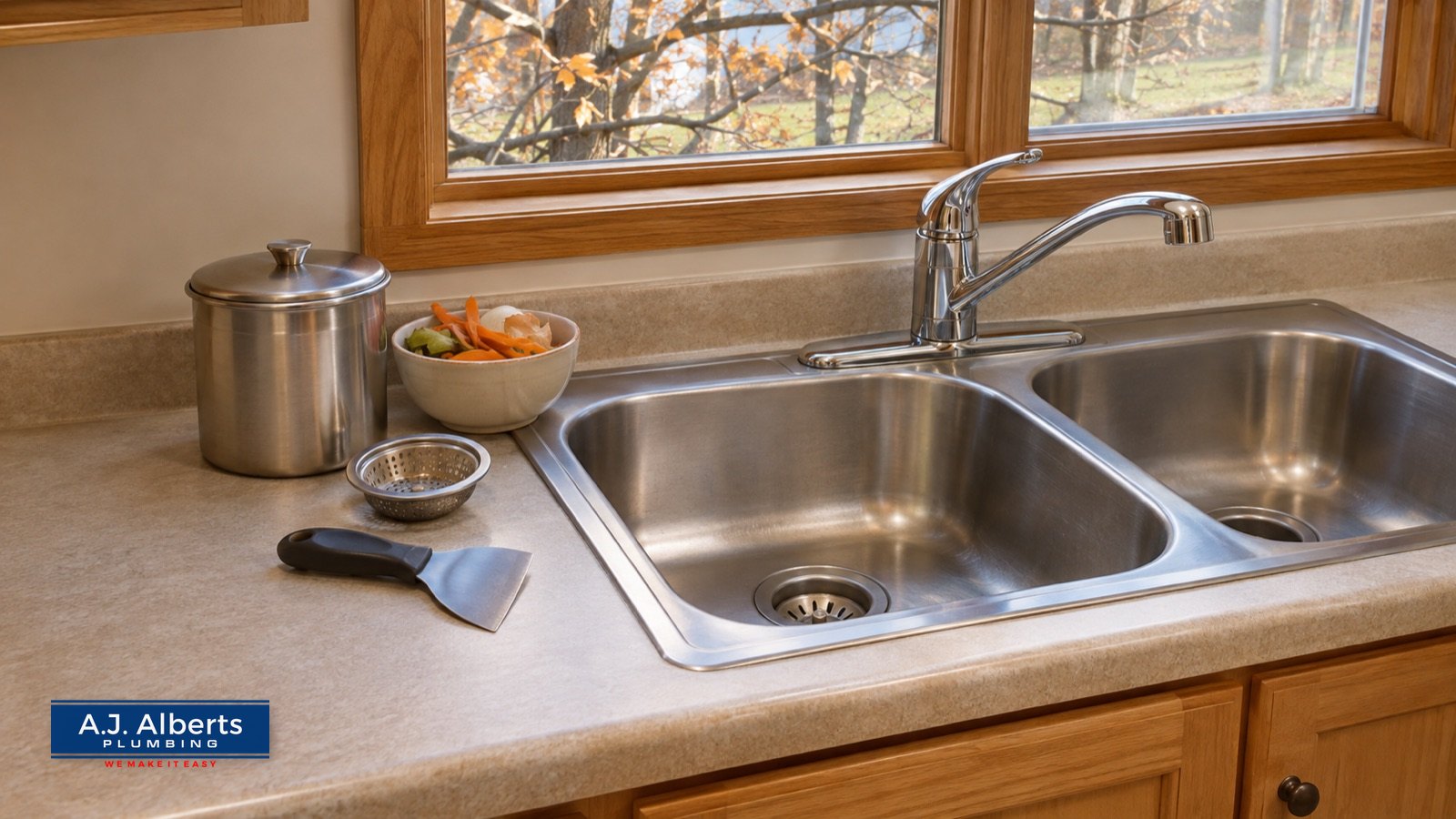
Prepare Thanksgiving plumbing by clearing existing slow drains, keeping grease and food scraps out of the sink, putting wipes and paper products in the trash, and planning hot-water use before guests arrive. If several fixtures are slow, sewage is backing up, or the water heater is leaking, handle that problem before the holiday instead of hoping extra use will clear it.
Published November 4, 2026 by Steve Grohn, owner of A.J. Alberts.
Thanksgiving concentrates cooking, dishwashing, showers, toilet use, and laundry into a short window. This guide is for Twin Cities homeowners hosting family or overnight guests, whether the house is on a municipal sewer in Woodbury or Oakdale or a private septic system near Afton, Hudson, or River Falls.
The goal is not to make a perfect plumbing system in one afternoon. It is to identify warning signs early, reduce avoidable strain, and know when a problem has moved beyond a host checklist. A slow kitchen sink, a gurgling toilet, or a water heater that already struggles should be diagnosed before the house is full.
What does Brown Friday mean for a homeowner?
You may hear plumbers call the day after Thanksgiving “Brown Friday.” It is an informal trade nickname for the drain and sewer calls that can follow heavy holiday use. It is not an official national ranking, and it does not mean every home is headed for a backup.
The useful lesson is simpler: Thanksgiving adds more solids, grease, water, and bathroom traffic to systems that may already have a partial restriction. A holiday meal does not create tree roots, a damaged sewer, or years of pipe buildup overnight. It can expose a problem that was already developing.
Use this four-zone review before guests arrive:
| Zone | Check before hosting | Reduce the risk | Call before the holiday when |
|---|---|---|---|
| Kitchen | Sink flow, disposal operation, trap leakage, dishwasher discharge | Scrape plates, capture solids, collect grease, stagger dishwasher cycles | The sink drains slowly, backs up into the other basin, leaks, or repeatedly trips the disposal |
| Bathrooms | Toilet flush, shower and sink drainage, shutoff access | Provide a trash can, keep wipes and paper products out of toilets, place a plunger where it is easy to find | Several fixtures gurgle, a toilet nearly overflows, or water appears at a floor drain |
| Hot water | Leaks, unusual sounds, current mode, recovery between normal uses | Stagger showers, laundry, and dishwashing, and follow the model's manual | The tank leaks, hot water is discolored, the unit shows a fault, or normal demand already exceeds capacity |
| Private septic | Recent slow drains, odors, wet drainfield areas, maintenance history | Spread water use and sharply limit food solids and disposal use | Drains gurgle or back up, sewage odors persist, or wet ground appears over the system |
How should you prepare the kitchen sink and disposal?
Start with the material that never enters the drain. Keep a covered container near the cooking area for cooled fats, oils, and grease. Scrape plates and roasting pans into the trash or compost before rinsing. A basket strainer gives small scraps one more place to stop before they reach the trap.
The City of Woodbury’s sewer-backup guidance tells residents to store grease in a container, discard it after it hardens, and use garbage disposals sparingly. A disposal cuts food into smaller pieces. It does not turn grease, bones, skins, fibrous peels, coffee grounds, or a sink full of leftovers into drain-safe material.
Before the holiday, run cold water and test the disposal with an empty chamber. Listen for a normal start and stop. If it hums without turning, trips repeatedly, leaks below the sink, or sends water into the other basin, stop and diagnose the problem. Do not reach into the chamber, and do not keep resetting a jammed unit.
The existing garbage disposal dos and don’ts guide covers safe operation in more detail. For a recurring sink or main-line problem, review A.J. Alberts’ drain cleaning and sewer services instead of treating another temporary clearing as a complete answer.
What should guests know about toilets and bathroom drains?
Make the right disposal choice obvious. Put a lined trash can in each bathroom and keep extra toilet paper visible. Human waste and toilet paper are the only routine materials that belong in a toilet. Wipes, paper towels, feminine products, cotton swabs, dental floss, diapers, and similar items go in the trash.
This rule matters on both municipal sewer and septic systems. The U.S. Environmental Protection Agency’s septic system guidance says to flush only human waste and toilet paper and lists wipes, paper towels, grease, coffee grounds, and other solids as items that can clog or damage a system.
Test each toilet and let the tank refill. Confirm that the bowl clears without rising unusually high. Run the nearby sink and shower long enough to see whether water drains normally. One slow bathroom sink may be a local fixture issue. A toilet that gurgles when the shower drains, several slow fixtures, or water rising at a basement floor drain can point to a larger restriction.
How can you manage hot-water demand without creating a safety problem?
Start with the water heater’s present condition. Check the floor around the unit for moisture. Look for an active fault code, damaged venting, or a relief pipe that appears altered. Do not cover a leak with a towel and wait until after the holiday.
Plan demand instead of raising the temperature. Stagger showers, dishwasher cycles, and laundry. Give the water heater time to recover between clusters of use. If the home has a heat pump water heater, the U.S. Department of Energy explains that some models offer a high-demand mode that uses more electric resistance heat to recover faster. Not every model has that feature, and it uses more energy, so check the owner’s manual before changing modes.
The same DOE guidance recommends 120 degrees Fahrenheit for most residential applications. Increasing the setpoint to create more apparent capacity can raise scald risk and is not a safe substitute for correct sizing, maintenance, or a properly designed mixing-valve system.
If hot water runs out during normal household use, becomes rusty or cloudy, or the unit makes a new sound, schedule an inspection before adding guests. The Twin Cities water-heater service guide explains repair, replacement, and diagnostic options without assuming every symptom requires a new tank.
Does hard water change the Thanksgiving checklist?
Hard water does not cause a sudden food clog or make wipes flushable. Keep the drain and water-quality questions separate. Mineral scale can show up on fixtures and water-using equipment, but a slow sink still needs a drainage diagnosis and a weak shower may involve a fixture, valve, supply, pressure, or water-heater issue.
If the house has visible scale, unfamiliar water-conditioning settings, or hot-water performance that has gradually changed, note it for a proper evaluation after the immediate drain risks are addressed. A.J. Alberts offers a free basic in-home water test for hardness, iron, chlorine, pH, total dissolved solids, and alkalinity, plus nitrate for private-well customers. It is not a PFAS or lead laboratory test and does not establish overall drinking-water safety.
What should you do if a drain backs up during the gathering?
First, stop adding water. Do not run the dishwasher, washing machine, showers, sinks, or additional toilet flushes while sewage is rising. Keep children, pets, and guests out of the affected area. Avoid contact with wastewater and do not use a chemical drain opener in a backed-up system.
Then separate a likely private-line problem from a possible public-main problem. Woodbury tells residents that a backup occurring when the homeowner uses water is likely in the home’s system. Water rising when no one is using plumbing may point to the city main. Conditions differ by city, so contact the local utility for its current instructions when a public-main issue is possible.
Call a licensed plumber when the problem appears limited to the house or private sewer line, several fixtures are affected, or the cause is unclear. Tell the technician which fixtures backed up, what was running, whether neighbors have a similar problem, and whether any drain chemicals were used.
A seven-day Thanksgiving plumbing plan
About one week before guests arrive
Test the kitchen sink, disposal, dishwasher discharge, toilets, showers, and hot-water recovery during normal use. Schedule service now for recurring or multi-fixture symptoms. Review the Twin Cities fall plumbing checklist for outdoor shutoffs and freeze preparation that still matter in November.
One or two days before the meal
Empty sink strainers, place bathroom trash cans, set out a plunger, clear storage away from the main water shutoff, and prepare the grease container. Avoid starting a large plumbing project or pouring a chemical treatment into a questionable drain immediately before guests arrive.
During cooking and cleanup
Scrape plates, wipe greasy pans, and run the dishwasher in manageable cycles. On a septic system, spread high-water-use activities across the day. Ask overnight guests to leave space between showers instead of creating one long demand period.
After everyone leaves
Pay attention to a drain that is slower than it was before, a toilet that now gurgles, moisture around the water heater, or sewage odor. A temporary return to normal does not erase a recurring pattern. Write down what happened and arrange the right diagnostic service.
Related reading for Twin Cities hosts
- Garbage Disposal Dos and Don’ts
- The Twin Cities Fall Plumbing Checklist
- Drain Cleaning and Sewer Services
Sources and Further Reading
- City of Woodbury, Sewer Backups, accessed November 4, 2026
- U.S. Environmental Protection Agency, Frequent Questions on Septic Systems, accessed November 4, 2026
- U.S. Department of Energy, Purchasing Energy-Efficient Residential Water Heaters, updated September 28, 2026 and accessed November 4, 2026
The Bottom Line: Reduce the Load and Respect the Warning Signs
Thanksgiving preparation is mostly about keeping the wrong material out of the plumbing and resolving known symptoms before demand increases. Collect grease, scrape food into the trash or compost, keep wipes out of toilets, test every bathroom, and spread showers, laundry, and dishwashing across the day.
A host checklist cannot repair a damaged sewer, restore a failing water heater, or clear a restriction that affects several fixtures. Stop water use during a backup, separate a possible city-main issue from a private-line problem, and call for help when the evidence points beyond one fixture.
Steve Grohn, owner of A.J. Alberts, has served Twin Cities homeowners through the Woodbury-based plumbing and water-conditioning company since 1996. A.J. Alberts is locally owned and operated, and recommendations are made without commissioned salespeople.
Need a licensed plumber to address a slow drain, backup, leak, or hot-water problem before Thanksgiving? Call A.J. Alberts at 651-738-0580. Minnesota plumbing license PC150039.
Frequently Asked Questions
Can I pour turkey grease down the drain if I run hot water?
What Thanksgiving food scraps should stay out of the garbage disposal?
Should I use a chemical drain cleaner before Thanksgiving guests arrive?
How can I keep from running out of hot water when guests stay over?
What should I do first if sewage starts backing up?
Related services
Need Help in the Twin Cities?
Free in-home water test. Written upfront pricing. Lifetime craftsmanship warranty.